



How Landscapers and Property Managers Can Work Better Together for the Perfect Lawn
January 13, 2026
A great lawn doesn’t happen by accident. Anyone who works in landscaping knows this. It takes planning, timing, communication, and consistency. One of the most overlooked pieces of that puzzle is the relationship between landscapers and property managers.
When those two roles are aligned, communities thrive. When they aren’t, even the best grass struggles.
Property Managers Set the Vision, Landscapers Bring It to Life
Property managers are responsible for the big picture. They work directly with boards, homeowners, and residents to understand expectations, budgets, and long-term goals for the property. Landscapers, on the other hand, are the experts in the soil, irrigation, turf health, and seasonal timing.
When property managers partner closely with professional landscapers, the result is clearer direction and better execution. For example, a manager may know the community wants lush green common areas year-round, but it’s the landscaper who knows when overseeding actually makes sense and when it doesn’t.
Without that partnership, you end up with unrealistic expectations or wasted effort (and money).
Communication Prevents Small Problems From Becoming Big Ones
Many lawn issues don’t start big. A clogged irrigation head. Slight over-watering. Foot traffic in the wrong areas. These things seem minor at first, but if no one is talking, they turn into brown patches, mud, or resident complaints.
Strong communication between landscapers and property managers allows problems to be flagged early. A good property management company will actually welcome feedback from their landscape vendors and act on it quickly.
At Silvercreek Association Management, this kind of collaboration is treated as essential, not optional. Landscapers are encouraged to speak up when they see issues developing so fixes can happen before lawns suffer.
Using Technology Like Yard Pro to Strengthen the Partnership
Modern landscaping and property management isn’t just about boots on the ground anymore. Tools like Yard Pro’s mapping and irrigation technology can play a big role in keeping everyone on the same page.
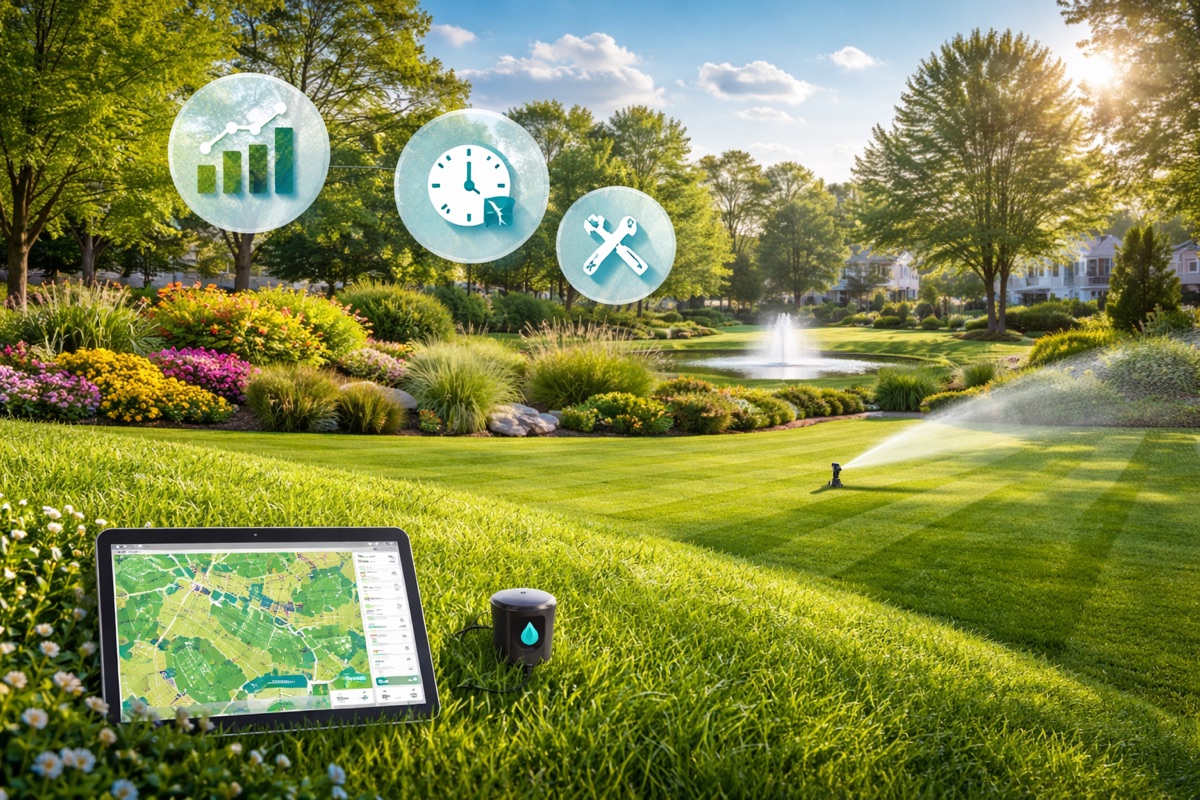
Shared mapping tools help both property managers and landscapers clearly see irrigation zones, plant types, and problem areas across a property. Instead of relying on memory or outdated plans, teams can reference the same information and make better decisions faster. Task management features allow property managers to identify issues such as broken sprinkler heads, clearly communicate the issue to landscapers with pictures and GPS pins, and receive notifications when the task has been completed.
Leak detection sensors can be placed on irrigation systems to notify property management and landscapers when a leak has occurred so it can be fixed quickly, saving thousands of dollars in water fees.
Irrigation tools are especially important. When water schedules, usage data, and system issues are visible and easy to communicate, it becomes much easier to minimize waste while keeping lawns and plants healthy. Over-watering is one of the most common problems in community landscapes, and it usually comes from lack of coordination, not lack of effort.
By using tools like Yard Pro to document adjustments, flag issues, and track water usage, property managers can better support their landscape partners and also demonstrate responsible water management to boards and residents. Healthier lawns and lower water bills tend to go hand in hand.
Budgeting Works Better When Everyone Is Involved
Landscaping is often one of the largest line items in a community’s operating budget. When property managers and landscapers work in silos, budgets tend to either fall short or get blown up by unexpected repairs.
When landscapers are included in planning conversations early, they can help forecast costs more accurately. This includes things like irrigation upgrades, turf replacement cycles, and seasonal fertilization needs. It also helps boards understand why certain expenses matter, which reduces friction and last-minute denials.
This kind of transparency builds trust on all sides.
Residents Notice the Difference (Even If They Don’t Say It)
Homeowners might not always comment when lawns look good, but they absolutely notice when they don’t. Healthy turf, clean edges, and consistent maintenance create a sense of pride in a community. That pride reduces complaints, improves resident behavior, and even supports property values.
When landscapers and property managers are aligned, maintenance looks intentional instead of reactive. That’s something residents can feel, even if they can’t quite explain it.
A True Partnership Benefits Everyone
The best results come when landscapers are viewed as partners, not just vendors. Property managers who take this approach tend to retain better landscape companies, experience fewer emergencies, and deliver better outcomes to their communities.
Likewise, landscapers who work with organized, communicative management teams are able to do their jobs better and more efficiently. It’s a win-win situation.
Companies like Silvercreek Association Management have shown that when property managers and landscapers collaborate closely, the lawn isn’t just greener — the entire community is healthier for it.