



How to Detect a Leak in Your Irrigation System (Before It Gets Expensive)
December 15, 2025
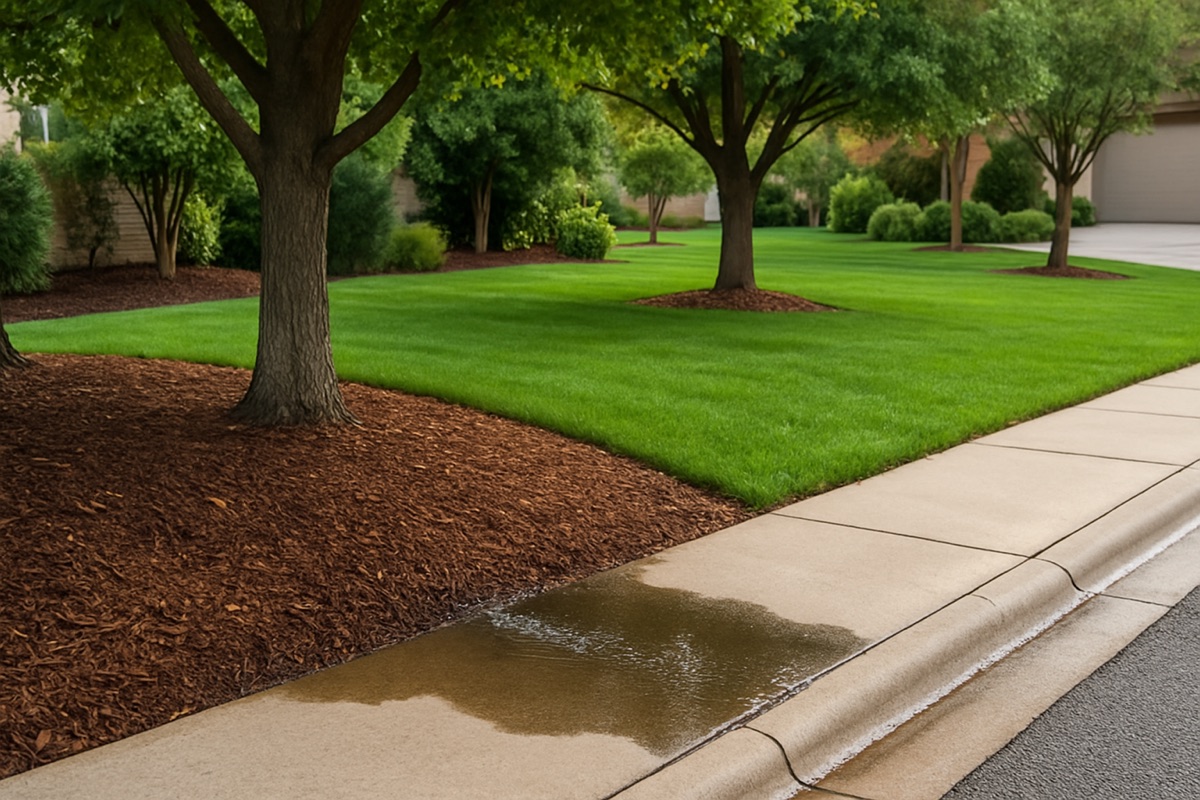
If you ask most homeowners how to find an irrigation leak, they’ll picture digging up the yard or chasing soggy spots. The truth is simpler, and more frustrating.
The problem isn’t finding the leak.
The problem is knowing there is one in the first place.
After working with hundreds of properties, I’ve seen the same pattern over and over. Drip irrigation leaks are common, quiet, and expensive, and most homeowners have them long before they realize it.
This guide explains how irrigation leaks actually show up, why drip lines are the hardest to catch, and how to detect problems early before they turn into a big bill or landscape damage.
Why Drip Lines Leak the Most
Drip irrigation is efficient, but it’s also fragile.
Drip lines are:
- Buried or hidden under mulch
- Spread across areas you rarely walk
- Made up of many small connection points
That makes them especially vulnerable to:
- Popped end caps
- Cracked fittings
- Animal damage
- Root intrusion
- Aging or sun-damaged tubing
When a spray head breaks, you notice it immediately. When a drip line leaks, it can run for weeks without any obvious sign. Pairing leak detection with yard mapping tools can help you visualize problem areas and reduce guesswork.
Common Signs You Might Have a Leak
Most drip leaks don’t announce themselves. Instead, they leave subtle clues:
Water where it shouldn’t be
Water on your driveway or along the street, constantly damp soil, soggy mulch, or muddy areas without a clear reason.
Plant stress
Plants near the leak may be thriving, while others are stressed or dying due to pressure loss.
Higher water bills
One of the most common first indications of a leak, especially when usage jumps without a schedule change.
Flow or pressure sensors can detect abnormal behavior long before visible damage appears.
The challenge is that these signs are easy to miss or dismiss, especially if the leak is in a part of the yard you rarely visit.
Why Leaks Are Usually Easy to Find (Once You Know They Exist)
Here’s the counterintuitive part:
Most irrigation leaks are not hard to locate.
Once you know there’s a problem, finding it is often as simple as:
- Running the affected zone
- Walking the drip line
- Looking for pooling, bubbling, or overly wet soil
- Listening for leaking water
The real issue is that many homeowners never get that signal to go looking. Small leaks stay small for a long time, quietly wasting water every cycle. Once you know there’s a problem, tools that help you map your irrigation system digitally make tracking down leaks far quicker and less destructive.
The Real Cost of a Small Drip Leak
Let’s look at a common example.
If the end cap pops off a standard 1/2-inch drip line:
- Water loss can be around 5 gallons per minute
- That’s 300 gallons per hour
- Or 7,200 gallons per day
At an average California water cost of about $6 per 1,000 gallons, that adds up to:
- $43 per day
- Over $1,300 per month
All from a leak that may never be visible unless you happen to walk right past it.
The Only Reliable Way to Catch Leaks Early
Visual inspection alone is not enough. The most reliable way to know you have a leak is to measure what’s happening inside the line.
That’s where irrigation leak detection sensors come in.
Two types of sensors work well when implemented correctly:
- Flow sensors, which detect unexpected water usage
- Pressure sensors, which detect abnormal pressure drops
When paired with good software, these sensors can alert you to problems before they show up in your yard or on your water bill.
This article, on How technology is transforming water management shows why sensors and smart systems catch leaks far earlier than visual inspection alone.
What to Look for in an Irrigation Leak Sensor
Not all sensors are practical for homeowners. Based on real-world installs, the ones that work best share a few traits:
Easy installation
Sensors should plug directly into drip lines like an emitter. Cutting pipe makes installation harder and limits adoption.
Long-term power
Solar power is essential. Batteries do not last long enough, and outlets are rarely nearby.
Good range
Your sensors should work anywhere in your yard without repeaters or complex networking. Long-range wireless matters.
Simple software
Alerts should be clear and actionable, not buried in dashboards.
YardPro sensors, for example, plug directly into drip lines, are solar powered, have over a mile of range, and cost $199 with free software. That puts them in the sweet spot for homeowners who want protection without complexity.
In Summary
If there’s one thing to remember, it’s this:
Most irrigation leaks are easy to fix.
Most homeowners just don’t know they have one.
Drip systems fail quietly. By the time damage is visible, you’ve often already paid for it in wasted water.
If you want to protect your landscape and your wallet, early detection is what actually makes the difference.